AI agents are reshaping how organizations approach work across industries. What began as simple automation is now evolving into systems that assist with planning, execution, and informed decision-making. These tools are no longer limited to isolated tasks. Instead, they play an active role across full workflows, helping teams handle complex operations more efficiently and with better visibility.
From Execution to Strategic Involvement
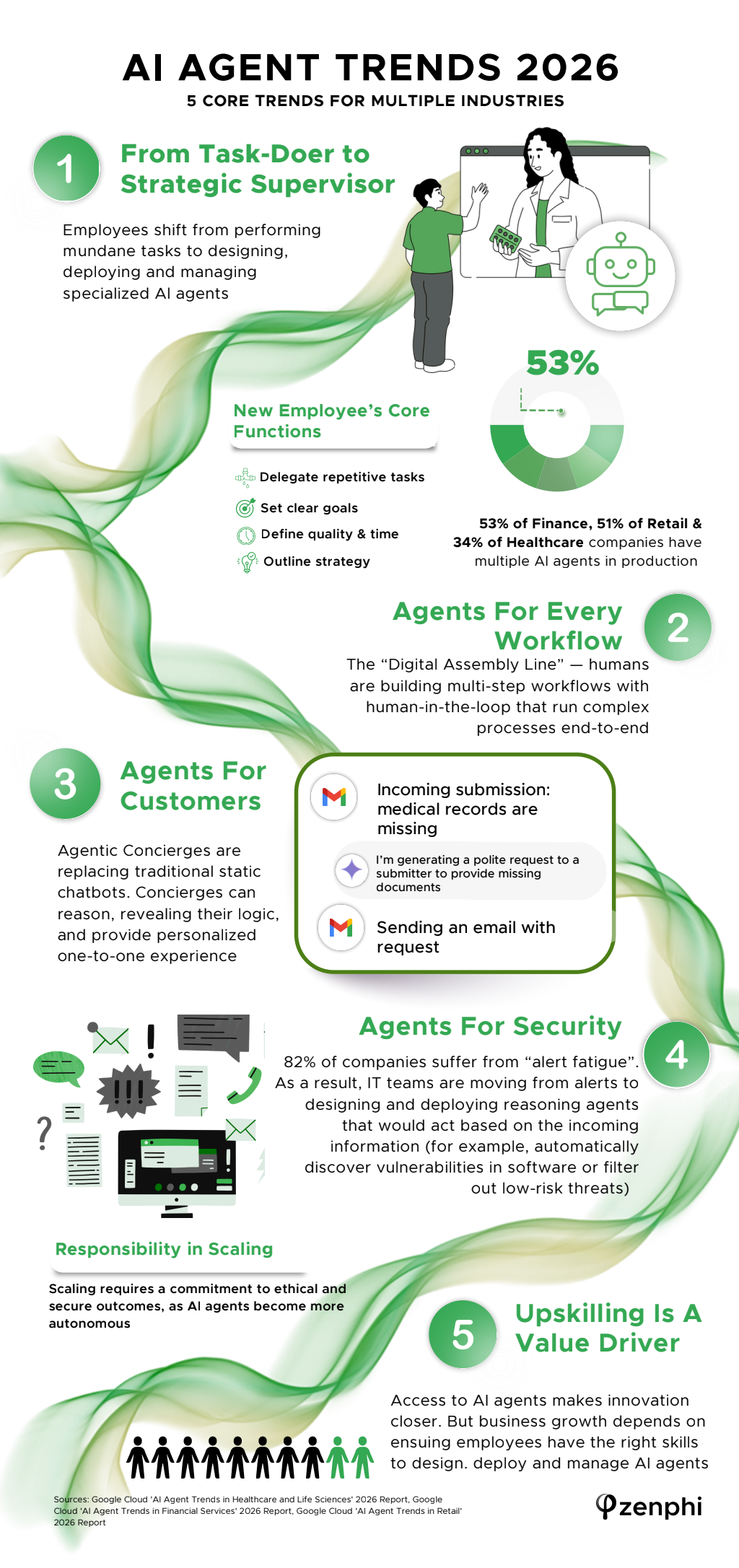
The role of AI agents is expanding beyond basic task completion into more strategic territory. Employees are moving away from repetitive responsibilities and toward designing and managing the systems that carry them out.
This transition is redefining everyday roles. Teams now focus on setting priorities, establishing performance standards, and reviewing results. Routine tasks are assigned to AI agents, freeing up time for deeper analysis and problem-solving. This leads to more productive use of resources and improved overall efficiency.
Agents Operating Across Entire Processes
AI agents are no longer confined to single functions. They are now integrated throughout entire workflows, supporting processes from start to finish. Often, multiple agents work together in sequence to ensure smooth handoffs between each stage.
Even with this level of workflow automation, human oversight remains essential. Teams monitor performance, validate outputs, and step in when adjustments are needed. This approach maintains accuracy while benefiting from increased speed. Many organizations are using agents to manage data processing, communication, and follow-ups, reducing friction in complex operations.
More Adaptive Customer Experiences
Customer-facing AI has become more flexible and responsive. Earlier systems relied heavily on predefined scripts, which could limit their effectiveness. Today’s agents are better equipped to understand context and deliver more relevant responses.
They can identify gaps in information and ask clarifying questions when needed. They also adjust tone and messaging based on the situation, creating more natural and personalized interactions. This results in a better overall experience, with clearer communication and less frustration for users.
Strengthening Security and Real-Time Decisions
Security teams often face an overwhelming number of alerts and data points. AI agents help prioritize what matters most by filtering noise and identifying genuine risks. They can detect unusual behavior, flag potential threats, and reduce unnecessary alerts, allowing teams to respond more efficiently.
In addition, these agents support real-time decision-making by continuously analyzing incoming data. This helps organizations react faster and make more accurate decisions, especially in high-pressure scenarios.
The Need for Ongoing Skill Development
As AI agents become more integrated into daily operations, workforce capabilities must evolve alongside them. Simply adopting these tools does not guarantee success. Teams need to understand how to implement, manage, and evaluate them effectively.
Training plays a critical role in this shift. Employees must learn how to set clear objectives, measure outcomes, and refine workflows over time. This creates roles that combine technical understanding with strategic thinking. At the same time, organizations must ensure responsible use, with a focus on security and ethical considerations as agents take on more responsibility.
By 2026, AI agents are becoming a foundational part of how work is structured. They support end-to-end workflows, enhance customer engagement, and improve real-time decision-making. This evolution is changing both the tools organizations use and the expectations placed on their workforce. Companies that adapt will be better positioned to scale efficiently and navigate increasing complexity.