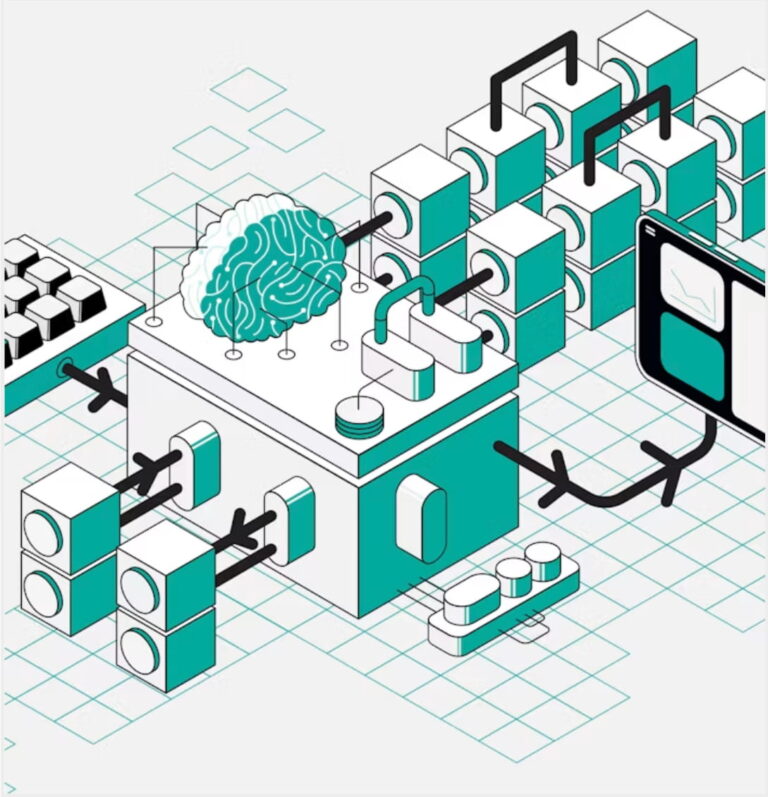
In 2020, a senior recruiter at a UK staffing agency could comfortably do their job with three tools: a CRM, an email client, and Microsoft Word. By 2026, the same recruiter is expected to operate confidently inside an AI assistant, command an AI-powered CV formatter, navigate an ATS that suggests candidate matches algorithmically, and write prompts that get useful results out of large language models. The shift took less than five years, and it caught a lot of recruitment teams unprepared.
This is not a story about AI replacing recruiters. Every credible study of recruitment automation in 2025 and 2026 reached the same conclusion: AI is changing what recruiters do, not whether they exist. The recruiters who are thriving in the new stack are the ones who treated AI tools as a skill to learn, the same way an earlier generation learned to use LinkedIn or Boolean search. The recruiters who are struggling are the ones who waited for someone else to teach them.
This guide is for recruitment professionals, training leads, and operations managers who want to understand what learning the new recruitment stack actually looks like, and where to start.
What changed in the recruitment toolkit
The recruitment stack in 2026 looks dramatically different from the one most recruiters trained on five years ago. The differences are not cosmetic, they reflect a change in how recruiters spend their time.
The tools recruiters used in 2020:
- A CRM or ATS for candidate records
- Email client for outreach and client communication
- LinkedIn Recruiter for sourcing
- Microsoft Word and Excel for documents and reporting
- A phone for screening calls
The tools recruiters use in 2026:
- A CRM or ATS still, but with AI-driven matching and ranking built in
- AI assistants like Claude Desktop or ChatGPT for drafting, summarizing, and research
- AI-powered CV formatters that handle reformatting, branding, and anonymization automatically
- AI sourcing tools that search across multiple platforms simultaneously
- Transcription and analysis tools that turn screening calls into structured notes
- Workflow automation platforms that connect everything together
The shift means a recruiter spends less time on document preparation, research, and administrative work, and more time on judgment calls: which candidate to advance, how to present them to a client, how to negotiate a difficult counter-offer. The mechanical work has moved to AI. The human work has gotten more concentrated.
Why AI literacy is now a recruiter skill, not a nice-to-have
Five years ago, learning new technology was something individual recruiters could choose to invest in. The ones who did got an edge. The ones who did not could still operate effectively because the core workflow was unchanged.
That is no longer true. AI literacy has crossed the threshold from competitive advantage to baseline expectation in three concrete ways.
Speed-to-submit has dropped dramatically. A recruiter using AI-assisted workflows can prepare a candidate submission in five to ten minutes. A recruiter doing it manually still needs 30 to 45 minutes. In a market where clients often hire the first qualified candidate they see, that speed gap directly translates into placement rates.
Client expectations have shifted. Sophisticated buyers of recruitment services now assume their agency uses AI to deliver candidates faster and at higher quality. Agencies still relying on manual workflows are increasingly forced to compete on price, which compresses margins across the industry.
Hiring teams are screening for AI competence. In 2025 and 2026, recruiter job descriptions started explicitly mentioning AI tool proficiency. Agencies are training existing recruiters, hiring AI-fluent candidates, and quietly letting go of recruiters who cannot adapt. AI literacy is no longer optional for a recruitment career.
What learning the new stack actually looks like
The good news is that most modern AI recruitment tools are designed to be learnable on the job. A recruiter does not need a computer science background to use them effectively, but does need to invest deliberate time in each one. Here is what a structured learning path looks like for the typical recruitment professional.
Stage 1: Conversational AI fundamentals
Before learning specialized recruitment tools, recruiters benefit from spending time with general-purpose AI assistants like Claude, ChatGPT, or similar. The goal at this stage is not productivity, it is comfort with the interface and intuition for what AI can and cannot do.
Practical exercises that build this foundation:
- Draft a candidate outreach message and ask the AI to rewrite it in three different tones
- Paste a job description and ask the AI to identify the top five required skills
- Summarize a long client email into three action items
- Brainstorm follow-up questions for a candidate interview
This stage usually takes one to two weeks of daily use to build basic fluency.
Stage 2: Specialized recruitment AI tools
Once the recruiter is comfortable with conversational AI, the next stage is learning the AI-powered tools built specifically for recruitment workflows. CV formatting and tailoring is usually the easiest starting point because the value is immediate and measurable.
For example, an AI CV formatting platform like FormaCV reduces the work of preparing a client-ready candidate submission from 45 minutes to about three minutes per CV. The recruiter uploads a raw resume in any format, the tool extracts the data, applies the agency template, anonymizes sensitive details for blind submissions, and outputs a polished document ready for client delivery. Learning this stage of the stack typically takes a few days of guided practice, often with the agency providing a structured onboarding session.
Other specialized AI tools worth learning at this stage:
- AI sourcing platforms that search across LinkedIn, GitHub, and other professional networks
- Interview transcription tools that convert calls into structured notes
- Automated reference-check tools that handle initial outreach to candidate references
- AI-driven matching tools built into modern ATS platforms
Stage 3: Workflow design and automation
The final stage is where recruiters move from using individual AI tools to designing workflows that combine them. This is where the productivity gains compound dramatically.
A recruiter at this stage might design a workflow like: receive a new vacancy from a client, use an AI sourcing tool to identify 50 candidates, use the ATS AI to rank them by fit, use AI screening to send personalized outreach to the top 20, use FormaCV to format the 5 who respond positively, and submit them to the client through the ATS push-back integration. What used to be a week of manual work becomes two to three days of supervised AI execution.
Most recruiters reach this stage only after six to twelve months of using AI tools regularly. The skill is not about the tools themselves, it is about understanding which tasks to delegate to which tool and where human judgment still adds the most value.
How to organize team-wide AI training
Individual learning is necessary but not sufficient. Recruitment teams that successfully adopt AI tools usually invest in structured team training rather than leaving it to each recruiter to figure out alone.
A practical structure for team-wide AI training:
- Identify a tool champion. One recruiter (often a younger team member with AI affinity) becomes the internal expert for each tool. They handle questions, run training sessions, and stay current with new features.
- Hold weekly tool-specific sessions. Thirty-minute sessions focused on one tool at a time. The champion demonstrates a use case, the team practices live, questions get answered immediately.
- Document the team’s playbook. Capture the specific workflows the team has developed, including prompts, templates, and tool configurations. This becomes the onboarding material for new hires.
- Run quarterly retrospectives. Every three months, review which tools delivered value, which did not, and what should change. The recruitment AI landscape moves fast enough that quarterly review keeps the stack current.
- Budget for experimentation. Set aside a small monthly amount for the team to try new tools. Some will not work out. The ones that do can change the team’s productivity meaningfully.
Agencies that follow this structure typically reach full AI fluency across the team in six to nine months. Agencies that leave training to individual recruiters often take two to three years and end up with uneven adoption that limits the productivity gains.
What recruiters should not delegate to AI
Learning to use AI tools well also means learning where AI should not be used. Some parts of the recruitment process remain firmly human, and recruiters who delegate them to AI risk damaging candidate relationships, client trust, and their own professional judgment.
The categories that should stay human:
- Final candidate evaluation and recommendation. AI can rank, but the recommendation to a client should come from a recruiter who has spoken with the candidate
- Sensitive conversations. Counter-offer negotiations, candidate withdrawals, difficult client feedback. These require human empathy and judgment
- Strategic client conversations. Understanding what a client actually needs, beyond the job description, requires reading between the lines in ways AI does not handle well
- Ethical judgment calls. Should this candidate be presented if there are red flags? Should this client be told something difficult? These are recruiter decisions
The recruiters who get this balance right are the ones whose value to their agency goes up as AI tools improve. They use AI for execution and reserve their time for judgment, relationship-building, and the parts of recruitment that genuinely require a human.
A practical starting point
For recruitment professionals just beginning to learn the new stack, the most practical advice is to start small and build consistency. A workable starting plan:
- Week 1 to 2. Use a general AI assistant (Claude, ChatGPT) daily for low-stakes tasks. Drafting emails, summarizing documents, brainstorming questions
- Week 3 to 4. Add one specialized recruitment tool. CV formatting platforms like FormaCV are a common first choice because the productivity gain is immediate and visible
- Month 2 to 3. Layer in one additional tool per month. Sourcing, transcription, matching. One at a time, with time to actually learn each before adding the next
- Month 4 onward. Start designing workflows that connect multiple tools. This is where the major productivity gains arrive
The recruiters who follow a structured learning approach reach the productivity frontier within six months. The ones who try to learn everything at once usually give up. The ones who never start at all are the ones whose careers are most at risk.
Conclusion
The recruitment industry has gone through several technology shifts in the past two decades, from paper to digital records, from cold calling to LinkedIn outreach, from spreadsheets to CRMs. The shift to AI is bigger than any of those, but it follows the same pattern: the recruiters who learn the new tools early get the productivity advantage, and the ones who wait fall behind.
What is different this time is the speed of the change and the depth of the productivity gain. A recruiter using the modern AI stack effectively can submit two to three times more candidates per week than a recruiter doing the same work manually, with higher quality and lower error rates. That gap will not close. If anything, it will widen as AI tools continue to improve.
For training leads, the practical takeaway is to build AI fluency into recruiter onboarding and ongoing development. For individual recruiters, the takeaway is to start learning now, one tool at a time, and to keep going. The new recruitment stack is not coming, it has already arrived. The only question is who will be fluent in it first.