At the end of a classroom debate, the question I expect to hear first is “Who won?” It’s a fair question. But before the students pack up, I want each of them to be able to answer a second one. What will you do differently the next time you speak?
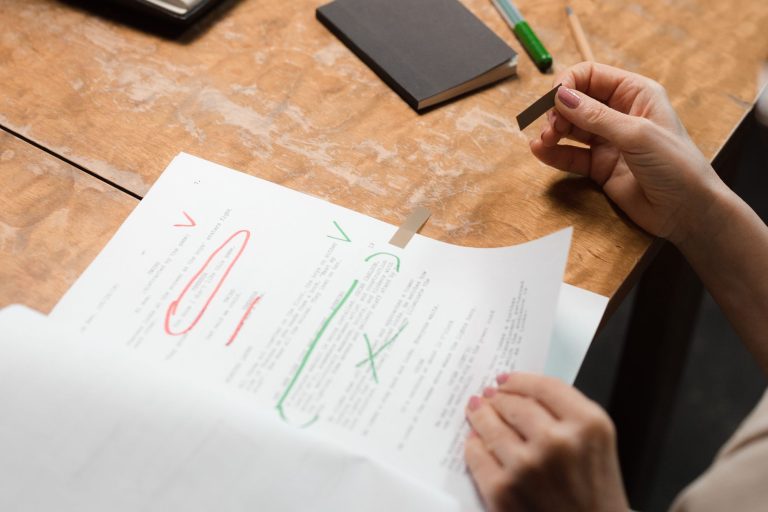
“Explain more” is easy to write and hard to act on. The student may add another example when what you wanted was a clearer explanation of the first one. I give each speaker one instruction tied to a moment in their speech, then let them try it while the debate is still fresh. Here’s how that can work with six speakers, a sheet of paper and a clock.
Set up one short round
Take the motion “This House would require students to keep their phones in lockers during the school day.” Give two teams of three students five minutes to prepare. Each speaker gets two minutes. Alternate sides, and ask the final two speakers to compare what the teams have already said. The names and speeches below are fictional.
Before the round, draw six rows on a sheet of paper. Put each speaker’s name in the first column and leave room for two short notes in the other columns. One note records what you heard. The other tells the student what to try. During the speech, write only the first note. A few words such as “quiet room → concentration?” will help you remember the gap without taking your attention away from the next argument.
What I’d write for each speaker
Leila, first proposition. She says that storing phones away will make classrooms quieter. She jumps straight from quieter classrooms to better learning. I’d write, “After you say ‘a quieter classroom’, describe what a pupil can finish when they aren’t stopping to check messages.” She can practise that link in two sentences.
Owen, first opposition. He raises a case where a pupil needs to contact home about a change to their journey. His example is useful, but it’s unclear whose problem it is. “Name one pupil who needs to change their travel plans and say what they would have to do under the rule.” That gives the other team a specific situation to answer.
Mina, second proposition. She answers Owen by saying that families can ring the school office. For next time I’d write, “Give one example the office can handle, then say what happens if the message is urgent.” This tests whether her solution covers the difficult case as well as the ordinary one.
Sam, second opposition. He suggests keeping phones in bags during lessons and allowing them at lunch. He explains the alternative without showing how it solves the proposition’s problem. “Say which distraction your rule stops during a lesson, then explain why students still need access at lunch.” This turns the alternative into an answer to the motion.
Ivy, third proposition. She repeats the point about interruptions. I’d write, “Compare how easy it is for a teacher to enforce the locker rule and the bag rule during the same lesson.” She has enough material from the previous speeches to make that comparison without adding another argument.
Rafi, third opposition. He says his team’s concerns matter more but doesn’t tell us why. “Compare a routine distraction with the travel problem Owen raised. Say which happens more often and which is harder to put right.” The judge then has a reason to agree or disagree with his conclusion.
Give them thirty seconds to try it
Here is a before-and-after comment for Ivy. My first version might be “Good summary. Weigh the arguments more.” The revised version is “Compare the locker rule and the bag rule while the teacher is helping another group. Say which is easier to enforce in that moment and why.” The revised version names the two choices and gives her a scene to picture.
I put the students in pairs and give them a minute to look at their comments. Each takes up to thirty seconds to redo just the part of the speech the comment refers to. The listener repeats back what they heard. For Ivy, the listener might say, “You explained how a teacher could tell whether people followed the locker rule.” If the listener can only repeat the original point about interruptions, Ivy gets another go at the comparison.
Start the next lesson with the same instruction
Before handing out the next motion, give students back their comments or ask them to open the notes they kept. Give them two minutes to underline the action and put a star beside the place in their new outline where they’ll use it. A student working on comparison might leave two lines under their final claim, one for each side’s approach. Listen for that single change in the next round. If it shows up, name it. If it’s still missing, give the student another short chance to try it.
A result tells the class how this debate went. A specific instruction and a chance to act on it give every speaker somewhere to start next time.