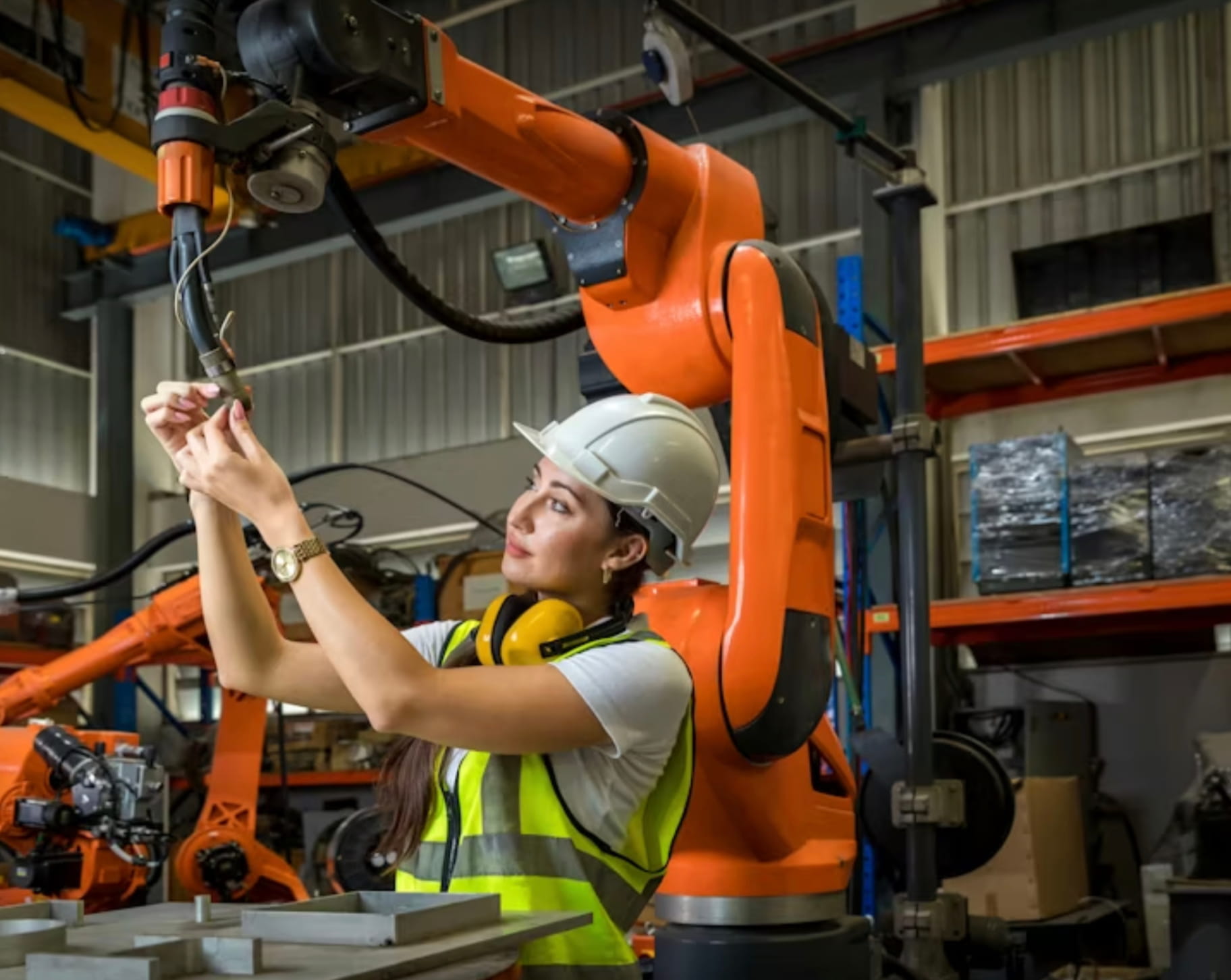
For many fabrication shops, automation is less about capability and more about confidence. The technology is proven. The real question is how it will perform within the realities of your shop, your mix of parts, your workforce, and your delivery demands. Robotic welding is often the most practical place to begin because it targets a process that directly affects throughput, consistency, and scheduling reliability. When done right, a first weld cell becomes a working blueprint for future automation efforts.
Robotic welding also changes how labor is used. Instead of relying on a limited pool of skilled welders to meet production demand, shops can redirect that expertise into higher-value roles. Experienced welders can focus on process development, fixture validation, quality oversight, and training. This shift improves consistency while reducing dependence on hiring in a tight labor market. It also makes production more predictable, with stable cycle times and repeatable quality standards.
What sets up a successful first cell
A strong starting point begins with controlled scope. Select a group of parts that share similar material thickness, joint types, and access points. Keeping the initial application focused helps reduce complexity and allows the team to build a repeatable process. Parts that regularly cause delays or require excess labor are often ideal because improvements are easy to track.
Fixturing is one of the most important elements in the system. Many perceived “robot issues” are actually caused by upstream variation. Inconsistent fit-up, shifting reference points, and irregular gaps create instability that the robot cannot fully compensate for. A well-designed cell includes secure clamping, consistent part location, and a clear strategy for managing variation. Reviewing joint prep, torch access, and loading as a complete system helps prevent bottlenecks during operation.
Programming supports consistency, but it should not be the only safeguard. Effective cells include process controls, consumable tracking, and simple verification steps to keep defects out of the workflow. Integrating inspection into the cell, rather than leaving it downstream, helps maintain quality without slowing production.
Clear ownership is also essential. Define who operates the cell, who maintains it, and who has the authority to pause production when inputs fall outside acceptable limits. Training should be specific to the shop’s processes so the team can manage the system confidently.
When approached with discipline, robotic welding delivers more than automation. It creates a structured way to improve processes, build internal expertise, and expand automation in a controlled, repeatable way.
To explore how robotic welding can fit your operation and growth plan, take a look at the accompanying resource from Capital Machine Technologies, a provider of press brakes service, repair and maintenance.